What surprised you the most?
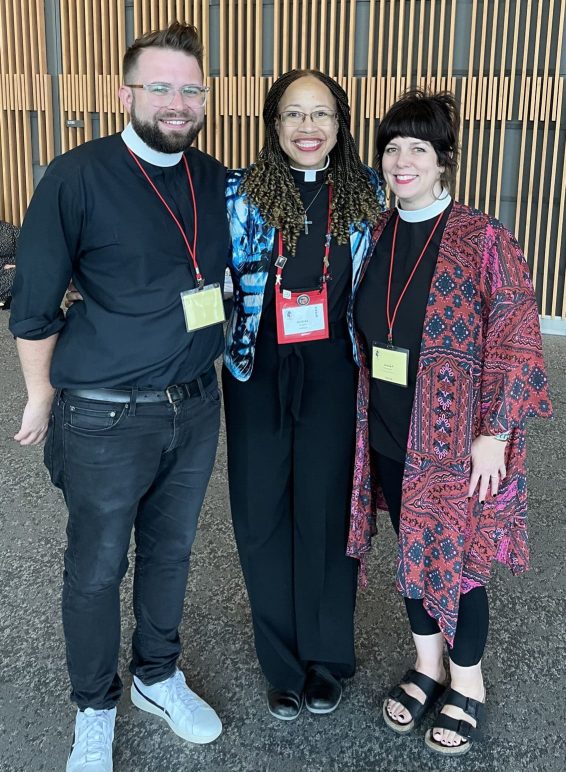 We were most surprised by how many people we knew from our time in The Episcopal Church. Having lived and ministered in four dioceses in different parts of the country, we ran into folks left and right whom we hadn’t seen in years! It was like a big family reunion. We had heard about how at other General Conventions you could feel the tension in the air. Nothing could have been further from the truth this year! There was nothing but joy and anticipation. Our Church has already weathered the storms of the 2000s around making progress in inclusion on human sexuality. The last GC was supposed to be in Baltimore, but ended up being online. Add in a nearly once in a decade vote on the Presiding Bishop, and there was a recipe for energy & excitement!
What was difficult?
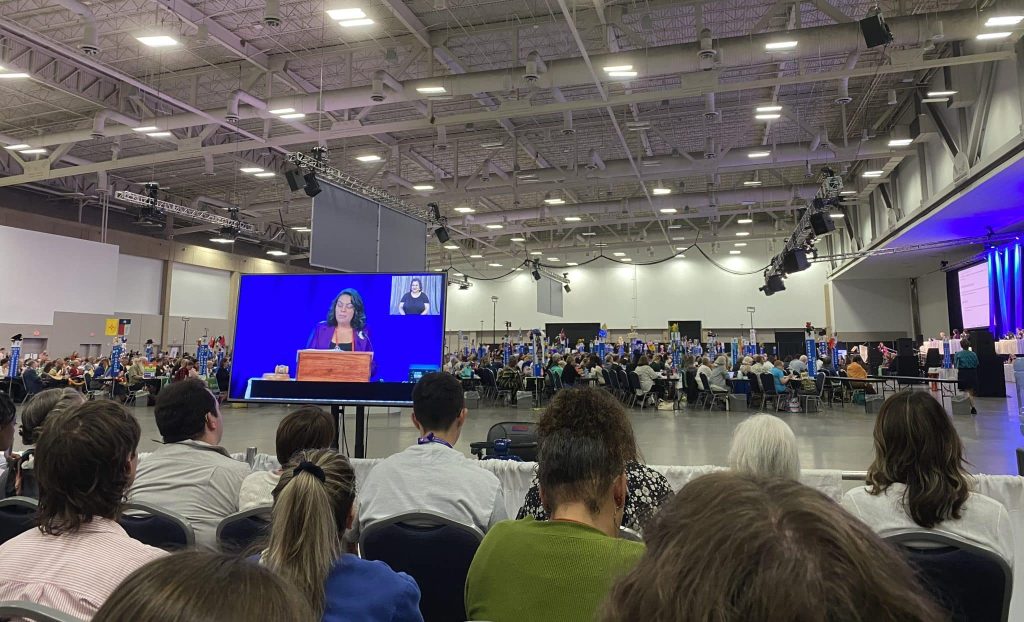
We had it pretty easy (being a delegate is much harder – they work around the clock in sessions and on resolutions). There were over 300 resolutions they were trying to get through in only a few days. We learned that the House of Bishops was able to hit the ground running because they meet periodically in-between conventions and have a lifetime appointment (so they get to know how it works). The House of Deputies can change every year depending on who is elected from each diocese. The slowness to get things rolling in the House of Deputies meant that we ended up spending more time in the House of Bishops. It was fascinating to watch what our spiritual leaders were thinking about regarding where we are as a church, as well as how we interact with the problems of the world. The conversation around Israel and Palestine was especially noteworthy and went through much debate over the word genocide.
The other thing that was hard was that there was a moment when the House of Deputies had put forward Resolution C032, “A Prayer To Remember The Innocents,” which apologizes for the church’s role in indigenous boarding schools and the abuses that happened there. According to the Episcopal News Service: “Hundreds — or as many as tens of thousands — of Indigenous youth are estimated to have died during the 19th and 20th centuries while attending boarding schools, which were designed to assimilate Native Americans into the dominant white culture and erase Indigenous languages and practices. In many cases, students faced physical, sexual and mental abuse, even death. The Episcopal Church is known to have operated at least 34 of the 523 identified boarding schools in the United States, including at least nine in South Dakota.”
The prayer had been written by native folk directly connected to the incident. and unanimously passed from the House of Deputies to the House of Bishops. Several retired bishops stood up and tried to rewrite the prayer, saying it was not poetic enough. Eventually, after patiently letting folks speak, the Bishop of South Dakota, Jonathan Folts, stood up and said, “They don’t need white people telling them how to pray again.” We remember feeling incredibly uncomfortable at the lack of sensitivity by some of the bishops (Rev. Dan was sighing in his seat over and over again), but also gave thanks that we are in a new era where the Church is growing in rebuking forms of paternalistic racism. The House of Bishops ended up unanimously passing the prayer as written.
What was exciting?
One of the most exciting things was being in the House of Deputies when the Presiding Bishop’s election was confirmed. We could not believe that Bishop Sean Rowe had been elected on the first slate. This was a further indication of the unity and peace present at this GC. Hearing his first address in person was energizing! He is the youngest presiding bishop ever elected at 49, but has more experience than many bishops older than him. He will focus on adapting the church’s structures to where the church is at post-COVID so that we can be best positioned to accomplish our mission. You can read more about this vision here.
One indicator of this is that he will be installed at the National Church’s office chapel instead of at the Washington National Cathedral. Not only will this save the church budget thousands of dollars, it will reduce the carbon footprint of all the bishops and dignitaries traveling to Washington, D.C., and will make it accessible to everyone via livestream technology. Click here to find out more about how to watch our new presiding bishop’s installation: https://www.episcopalchurch.org/publicaffairs/save-the-date-for-presiding-bishop-elect-rowes-installation-service/.
What spiritual lessons do you take away from your time at General Convention?
One of the very cool surprises at GC was to discover that one of Trappist monk Thomas Merton’s famous spiritual encounters was only a few blocks away from where the convention was happening. This revelation at the corner of 4th and Walnut led him to redefine his monastic identity with greater involvement in social justice issues. You can read about the encounter here.
At this pivotal time where we move from a prophetic Presiding Bishop (Michael Curry) to one who is more focused on systems and structures and as we face the reality of decline in so many Episcopal parishes, we were reminded that the heart and lungs of all Christian spirituality is social justice and contemplation. Prayer and work. We need to continue to be grounded in our hearts and in the wider world as we seek to adapt to the changing needs of our church. If Thomas Merton, the great spiritual luminary, could grow and evolve in new ways, we, as The Episcopal Church, can too.