 Throughout the history of the Episcopal Church in the United States, Black Episcopalians have been perceived as a separate but equal group, a marginal group, or a “problem.”
The debate about Black Episcopalians came to a head in 1882, when a group of White clergy and lay leaders met in Sewanee, Tennessee for a conference. With the rise of Black Episcopal churches, White southerners began to fear that a Black clergyperson or bishop might lead White parishioners one day. They decided to separate Black parishioners from the White churches.
Black Episcopal leaders immediately resisted this measure. However, the southern dioceses moved independently to create “separate but equal” colored conventions where Black congregations had limited power.
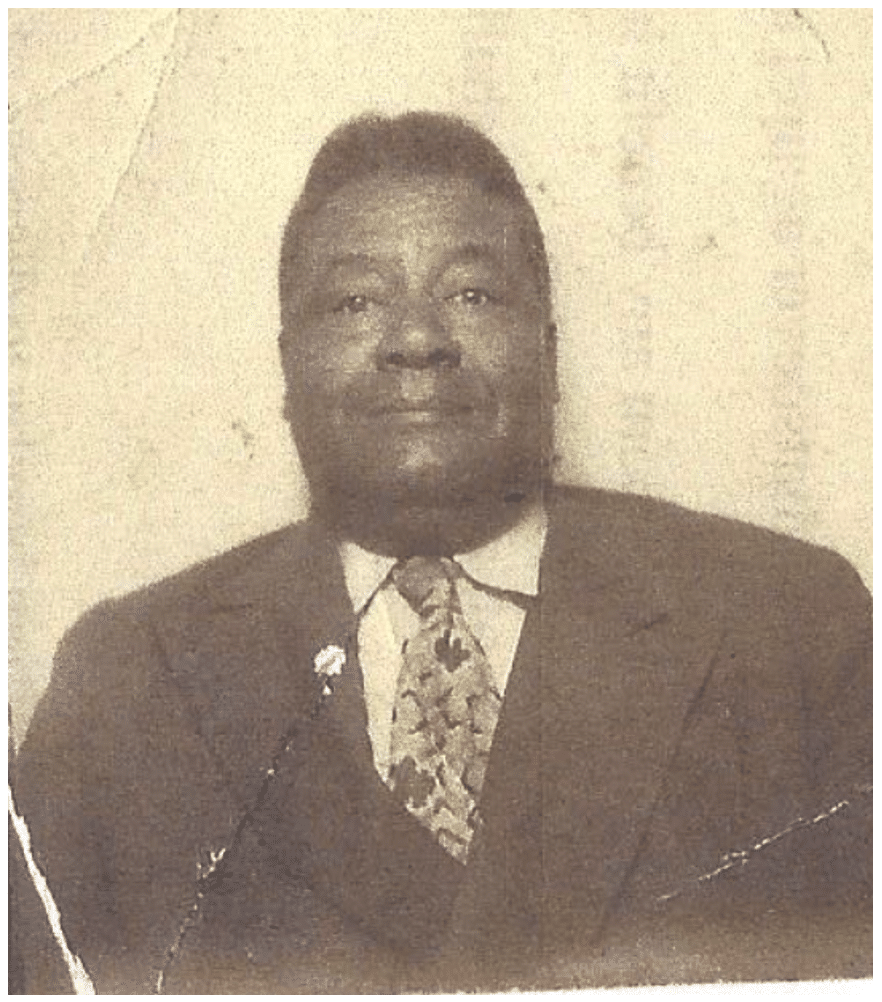
In response, Black Episcopalians sought to be understood as an integral part of the church, not as a separate group. From early in our history, Black Episcopalians have seen themselves as a corrective, working to help the church live into its mission of treating all people with dignity and respect. The Rev. John Herbert Jones is one of the early Black Episcopalians and grandfather of St. Paul in the Desert Parishioner Carolyn Roberson.
In 1885, John Herbert Jones, Sr. was born in the celery plantations of Sanford, Florida during a challenging time in the formation of America. From these humble beginnings, he rose to become head priest of St Mark’s Episcopal church in 1923, Winston Salem N.C.
Priests, such as Rev. Tolton, who have written of their personal trials, frustrations, and strong faith during the early 1900s, give a glimpse of the strong love, care, and commitment manifested by Father Jones in his well-recognized work in the church.
“The task that he was assigned could have presented many challenges and obstacles, since he had 5 sons and 2 daughters (all with Biblical names) that accompanied him and his wife, Bessie Bell. He was passionate about family altars and prayer.”
Educated by private tutors and a lifelong learner, Jones was ordained a Deacon in 1921 by Bishop E. Thomas Demby of Arkansas.
When he was preparing for the priesthood under Bishop Cheshire, his committee “found him quite well prepared in all subjects, and unusually proficient in the Bible.”[1]
On Sunday October 12, 1924, Rev. Jones became minister in charge of Saint Mark’s, the first Black Episcopal Church in Wilson, North Carolina, founded in 1887. He was also rector of The Blue Bird School, the church’s parochial school for Black children.
But parish membership was “greatly scattered, some having become members of sectarian bodies, and otherwise.” Starting from a “few standing true to the faith,” Jones canvassed former members to return to St. Mark’s. “Although some refused to come back, a goodly number returned.”[2]
“Reverend Jones reorganized a number of activities and services. A marked improvement has been registered in our church school life, the same showing continued growth. With the permission of the suffragan bishop [Henry B. Delany], he and Robert A. Jackson of St. Augustine’s Church in Camden, Maryland, held a public mission in March 1925. This was a success of no small proportions to say the least. Jones was also active in Convention.”[3]
In 1928, he left to minister at St. Stephen’s Episcopal Church in Winston-Salem, North Carolina. As the 2nd oldest Black Episcopal Church in North Carolina, it is steeped in history and is the first church that The Most Rev. Michael B. Curry served in (former Presiding Bishop of the Episcopal Church and the first African-American to hold that office). He was eventually forced to leave employment as a parish priest due to a lack of support for Black clergy at the time. Rev. Jones spent his last years working at the Howard University Divinity Library.
He is acknowledged on Carolyn Roberson’s columbarium niche at the Church of St. Paul in the Desert in Palm Springs, California to celebrate the contributions of Black Episcopal priests, especially because they were not often acknowledged for their incredible work in their own day.
Although there is so much more to the story of the racial history of the Episcopal Church, the attitudes that were forged in slavery and institutionalized during Reconstruction remain a challenge today. To move forward with our work of racial reconciliation we must reclaim this part of our history. And find out what attitudes remain – implicit or explicit – about White people’s perceptions of Black inferiority and purge those practices that promote racial segregation and paternalism.[4]
For additional resources on the time period of the Rev. John Herbert Jones, Sr., please see: Episcopalians & Race Civil War to Civil Rights by Gardiner H. Shattuck, Jr. University Press of Kentucky. 2000. It is available to loan from the Church of St. Paul in the Desert Parish Library. You can also considering taking Sacred Ground, the Episcopal Church’s Racial Reconciliation curriculum to find out more.
[1] Per Patrick M. Valentine’s The Episcopalians of Wilson County (1996)
[2] https://afamwilsonnc.com/tag/parochial-school/
[3] Ibid.
[4] This material was prepared by Dr. Joy Zavarich in consultation with Carolyn Roberson and The Archives of the Episcopal Church in Austin, TX.